Posts Categorized: News

Professors Gisele Azimi and Arthur Chan awarded new Canada Research Chair positions

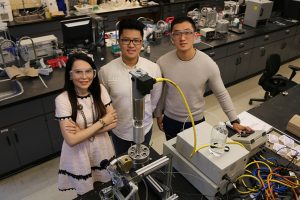
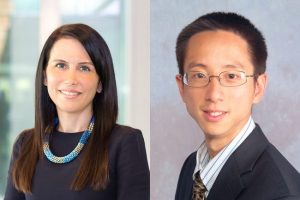
Left to right: Professor Gisele Azimi (ChemE, MSE) and Arthur Chan (ChemE) have both been awarded new Canada Research Chairs. (Photo credits, from left: Roberta Baker; courtesy of Arthur Chan)

Story by Tyler Irving, U of T Engineering News

Two U of T Engineering professors have been awarded new Canada Research Chairs.

Professor Gisele Azimi (ChemE, MSE) now holds the Canada Research Chair in Urban Mining Innovation, while Professor Arthur Chan (ChemE) is the new Canada Research Chair in Atmospheric Chemistry and Health.

Azimi’s research focuses on innovative ways to recover valuable elements from unconventional sources. These include rare earth elements, such as neodymium and dysprosium, which are needed for the types of batteries and magnets found in technologically advanced products such as smartphones, electric vehicles and wind turbines.

Using unconventional techniques such as supercritical fluid extraction, Azimi and her team are developing new ways to recover these valuable elements from materials that would otherwise be discarded as waste — old electronic devices, batteries left over from electric vehicles, and even byproducts of the aluminum industry.

By converting waste into valuable products and developing extraction methods that are use less energy or produce fewer byproducts, Azimi is at the leading edge of a more sustainable resources sector. Earlier this year, she earned the Faculty’s McCharles Prize for Early Career Research Distinction.

Arthur Chan and his team study air quality, particularly the impact of particulate matter such as organic hydrocarbons or heavy metals on human health. These compounds can be carcinogenic or have other toxic effects. The goal is to measure these pollutants in urban air and trace their sources in order to prevent future pollution.

Recently, the team collected dust from homes in Fort McMurray, Alta., analyzing it for evidence of harmful toxic substances left in the aftermath of the devastating 2016 wildfire. Their study revealed normal levels of contaminants that are comparable to homes across Canada, and so far, no evidence of long-term health risks from fire-ash exposure in residents’ homes.

“These new Canada Research Chairs will accelerate the work of top researchers in critical areas and help translate their innovations into new technologies, processes, and business models,” said Ramin Farnood, Vice-Dean, Research at U of T Engineering. “We are very proud of the work that Professors Azimi and Chan are doing to build a more sustainable world.”


Meeting a critical need in a supercritical way

Story by Tim Lougheed, Chemical Institute of Canada

“”It has been almost a decade since Gisele Azimi was pursuing post-doctoral work at MIT, where she realized just how dependent our technology was becoming on rare earth elements, which pose significant environmental and economic challenges as they are being processed into components for everything from cell phone sensors to wind turbine generators.

“We are utilizing rare earths in all these applications and at the end of the day we just put them into waste,” she says. “The amount of recycling in those days was less than 1% around the world.”

This awareness inspired her to found the Laboratory for Strategic Materials when she later became a faculty member in the University of Toronto’s Departments of Chemical Engineering and Applied Chemistry and Materials Science & Engineering.

Her goal has been to find new ways of obtaining these valuable agents, ideal from places where they have already been used, so that they become renewable commodities that are much easier to obtain. Among the most striking examples of this work has been a novel approach to teasing small amounts of rare earths out of the cracks and crevices of cell phones, without the use of harsh solvents and a great deal of effort.

“Our technique is supercritical fluid extraction,” she explains, noting that at the comparatively modest pressure of about 7000 kPa (about 70 atmospheres) the ubiquitous gas CO2 turns into the perfect tool for the job. “It’s a liquid that behaves like a gas, so it’s a very efficient solvent that can penetrate into solid matrices easily.”

Best of all, she adds, CO2 is abundant, inexpensive, and perfectly safe, so it can be easily obtained and just as easily disposed after use. This outlook characterizes many of the Laboratory’s objectives, which includes activities such as technospheric or urban mining, which adopts a new perspective on waste products such as mine tailings and regards them instead as an accessible source of new agents.

Nor are Azimi’s interests limited to recycling of existing materials. She is also designing innovative hydrophobic surfaces that can be placed inside piping structures that are susceptible to scale, which can eventually clog the flow through these conduits. “We call these new materials ‘scale-phobic,” she says.

Azimi’s accomplishments have earned her the both the 2020 Canadian Journal of Chemical Engineering Lectureship Award and the 2020 CSChE Innovation Award. Later this year she will publish a paper about her work in the Journal, but in the meantime, think about how CO2 can give new life to the most valuable parts of your cell phone.


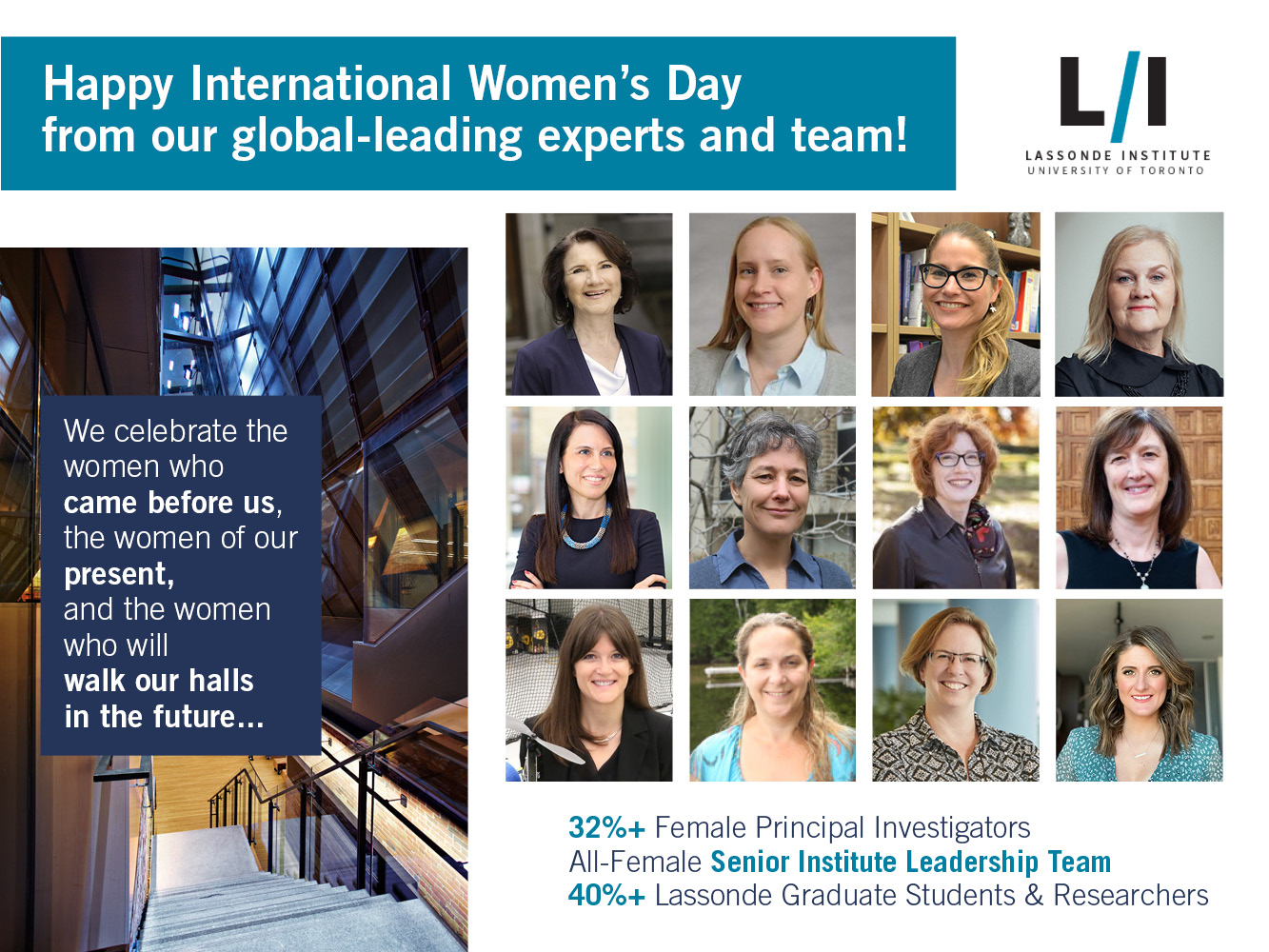
International Women’s Day 2020

The Lassonde Institute is breaking down barriers across disciplines, institutions, gender and so much more.

Contact Rachel Wallace | Director, Development & Strategy today to learn how you can be part of our ground-breaking work.


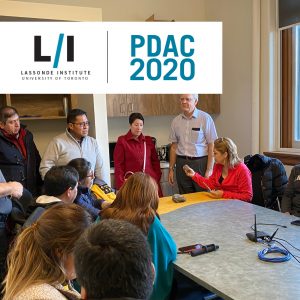
Lassonde Institute at PDAC: Peru’s Chamber of Commerce at Canada’s Mining University


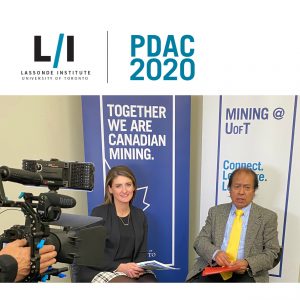
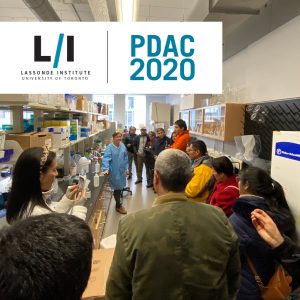
Lassonde Institute at #PDAC2020

Thank you to everyone that met with our team over #PDAC2020 to discuss the great mining research being done Lassonde Institute at the University of Toronto. We look forward to continued conversations and translating to real-world solutions, results and #talent!
Special thanks to:
  • BHP
  • Rio Tinto
  • Vale
  • SRK Consulting
  • CIM
  • Chrysalix Venture Capital
  • Unearthed
  • Lundin Mining Corporation
  • Deloitte
  • Stantec
  • Wheaton Precious Metals
  • JDS Energy, LLC
  • Teck Resources Limited
  • Stratalis Consulting
  • MineSense Technologies Ltd.
  • Peruvian-Canadian Chamber of Commerce

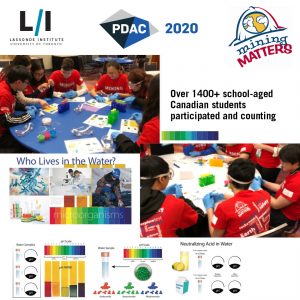
Mining Matters & Lassonde Institute Partners to Ignite Canadian Kids’ Curiosity

A new partnership between University of Toronto’ Lassonde Institute and Mining Matters (PDAC) launched early this year.

The educational outreach initiative created hands-on learning workshops illustrating the interconnection between water, environment and mining activities to Grades 7/8 students across the GTA.

Highlighting the importance of water quality and sustainable efforts in mining, the workshops showcase the many interdisciplinary jobs and opportunities needed to tackle the major challenges.  The participants are exposed to geochemistry, microbiology and state-of-the-art genomics, the exciting world of research as well as the important environmental applications for our planet.

The partnership’s goal aims to inspire an upcoming generation to tackle global water sustainability in mining and beyond.

The workshops continue to roll out across the GTA, during PDAC and currently is being piloted in Northern Canada including First Nations communities.

Stay tuned for more details!


L/I @ Future of Mining Conference 2019 Denver: Innovating the CEO’s Agenda

Lassonde Institute Director, Dr. Lesley Warren took to the stage with L/I Strategic Advisors Ian Pearce (xx) and George Hemingway (xx) with Vale’s Chief Technology Officer Afzal Jessa to discuss the pressing issues on Mining CEOs minds today.


L/I @ Future of Mining Conference 2019 Denver: Why We Must Collaborate to Innovate

‘Catalyst projects’ can drive mining sector collaboration

Catalyst projects’ that bring mining companies together to solve shared problems and mitigate risk could increase industry innovation, Rachel Wallace, director of the Lassonde Institute of Mining at the University of Toronto, has told delegates at the Future of Mining Americas 2019 event in Denver, Colorado, US.

Story first appeared in Mining Magazine on October 23, 2019 (here).


Critical Research on Base Mine Lake, Syncrude’s Demonstration Project of its Water-Capped Tailings Technology Lead by Professor Lesley Warren

Lesley Warren

Lesley Warren holds the Claudette Mackay-Lassonde Chair in Mineral Engineering and serves as the director of the Lassonde Institute of Mining at the University of Toronto.

Story first appeared on Syncrude’s Featured News Stories on March 6, 2020 (here).

As a daughter of a sailor, Lesley Warren always felt a close connection to water. But rather than following her father into the Royal Navy and exploring the briny deep, she followed her passion for water through scientific pursuits.

“My family was always linked to water because of my father, who was stationed throughout the world so we followed him. But water was always the thread,” says Lesley, who was born in England but grew up in several different ports of call. “Shortly after we emigrated to Canada when I was a teenager, I realized I could study water and wanted to pursue that. Water underpins human society.”

More than 30 years and two degrees later, Lesley is leading a team of scientists from the University of Toronto conducting critical research on Base Mine Lake, Syncrude’s demonstration project of its water-capping technology for fluid fine tailings.

“With pit lakes such as Base Mine Lake, you need to know what you are leaving in the closure landscape will seamlessly integrate with the surrounding natural environment. In order to create a healthy aquatic environment, you need oxygen,” says Lesley, an applied scientist who combines geochemistry with molecular and experimental microbiology to identify the processes that affect water quality and reclamation outcomes. “There are geo-chemical processes influenced by invisible microorganisms occurring in these systems that influence how much oxygen exists in the water. Our research aims to identify these microbially linked processes that are driving both positive and negative outcomes, so Syncrude can be smart about designing water-capped tailings technology to promote the processes that help produce oxygen.”

Lesley and her team take water samples from different depths of Base Mine Lake throughout the year to further their understanding about those processes. “Microbes live under many more conditions than we can so we sample the entire depth of the water cap to capture all the possible microbial processes that may be occurring that can influence oxygen concentrations. During the winter, this means drilling through the ice to collect samples from the water beneath. We sample the water all year to capture any seasonal changes in biological activity so we can provide a robust baseline of important oxygen-influencing processes,” says Lesley, who holds the Claudette Mackay-Lassonde Chair in Mineral Engineering and serves as the director of the Lassonde Institute of Mining at the University of Toronto.

Lesley has worked on projects at Syncrude for more than 10 years after some of the company’s researchers heard her speak on how the organization could employ microbially integrated geochemical investigation as part of its strategy to develop sound, science-based reclamation. Lesley has come to appreciate the approach taken by Syncrude.

“Syncrude has been a phenomenal partner. It values EDI (equity, diversity and inclusivity). It wants bright minds to help them find the best solutions. Syncrude is forward-thinking on so many levels. It values science and research and understands how it can propel the organization to add value and find the best solutions,” she says. “It also is not afraid to go a little further afield to find the right solutions.”

Lesley has not always experienced that same welcoming attitude during her career.

“Any female professor in any of the hard sciences has likely faced those obstacles. When I started out, maybe five per cent of the professors in the hard sciences were female. In many cases, this number has not changed in the 20 years that I have been a professor. I was fortunate to have a couple of female role models in my career,” says Lesley, who completed her undergraduate degree and PhD at U of Toronto. “That’s changing in STEM (science, technology, engineering and mathematics). I’ve certainly not experienced any barriers in the dozen or so years working at Syncrude, but that’s an organization that values inclusivity and diversity. That attitude comes straight from the top and reflects the culture of inclusivity that is embedded at Syncrude; an organization that is led currently by a female engineer.”

Lesley’s sentiments were echoed by two of her field researchers, who appreciate how much she and other female leaders in STEM have helped change the landscape for the next generation of female scientists.

“I wasn’t really aware how women were positioned in science while I was an undergrad,” says Tara Colenbrander Nelson, a water scientist who has studied and worked with Lesley since 2001. “Because I had Lesley as a mentor, I probably wasn’t as aware of some of the challenges as others in the field.”

Yunyun Yan, a PhD student who has just joined Lesley’s group this last year from China, agrees with her colleague. “The expectations for me are no different than for anybody else,” she says.

Being able to work in the field without any barriers helps produce better research, Tara says.

“There’s still a lot of science that can be learned from these projects. It’s a unique circumstance and a great place to be learning,” says Tara. “And that’s important because we work on closure projects, what happens after the mine is finished. You want the best people and brightest minds working on that so the environment is protected.”

And it’s difficult having the best people when you don’t include half of the population.

“Industry partners who want to develop the smartest strategies for these grand challenges are not going to want to limit themselves,” Lesley says. “We need to do the best we can do to steward water. I’m glad to be a part of finding those solutions because water will always be a part of who I am.”

Tara Colenbrander

Tara Colenbrander Nelson, a water scientist who has studied and worked with Lesley since 2001

How do you make industrial effluent and mining tailings clean enough that it can be reused?

This story first appeared on Uoft News on March 14, 2019 (here).

How do you make industrial effluent – the discharged liquid waste sitting in tailings ponds and other bodies of water – clean enough that it can be reused?

Vladimiros Papangelakis (ChemE) answered that question by treating water as a chemical.

“You have to do something to preserve, recover and reuse,” said Papangelakis, who is also the director of the Institute for Water Innovation. “To the same extent, you do similar things for all other expensive chemicals in any chemical process.

“The design is always in a way that you don’t waste your expensive chemicals.”

His forward osmosis-freeze concentration (FO-FC) hybrid process integrates the use of a spontaneous osmotic membrane step with natural freezing and simple chemicals, such as common salt, to separate and recover water from contaminated industrial effluents.

The water will likely not be drinkable after the process, he said, but it will be quite acceptable to be reused for industrial projects, which means the chemical plan won’t need to draw as much fresh water for its operations.

Forward osmosis is a process that has been refined and tested for about 10 years, using salt solutions like ammonium carbonate that decompose to gases and separate from the solution with modest heating.

Papangelakis and his research team were working with a new FO chemical invented by the Queen’s University department of chemistry. At the same time, his team was building a freezer unit simulating the effect of freezing on a Canadian lake in the north in order to produce ice to clean dirty water – when a eureka moment struck.

“The eureka moment was when we tried to combine these two things,” he explained. Instead of using a smelly, organic salt, “we found out that we could use any salt, if we combined the two processes and still be able to pull water through the membrane with minimum overall energy cost.”

In the end, the ice becomes the cleaner water that is recycled for industrial use.

“My shift (in thinking) is to the medium itself, treating water as a chemical rather than as something that is abundant and there in infinite amounts.”

Papangelakis said he believes FO-FC could have local applications in Canada taking advantage of the cold in winter, with the mining, food and oilsands industries. With the Connaught Innovation Award, his research team can begin to build an integrated prototype to demonstrate to industrial partners.

“When you compete with the entire university powerhouse – of  brains and ideas – the fact that your idea is being recognized as the winning ones is a satisfying thing.”


© 2026 Faculty of Applied Science & Engineering